What are goji berry benefits and side effects? Are goji berries low fodmap? Vegan? Gluten free? Acidic or alkaline? Good for you? Healthy? Sustainable? Here are goji berry pros and cons: all the info on goji berries that every ethical consumer wants to know…
Food is something we consume every day and if you’re like me, you do all the research you can to make sure you don’t hurt yourself, the planet, animals or others when shopping. As an ethical consumer myself, I am giving you all the info I’ve found on goji berry benefits and side effects.
You are going to learn all about goji berry benefits and side effects. This will include goji berry benefits for your health and potential risks, goji berry water footprint and carbon footprint, sustainability, if goji berries are vegan or impact animals in other ways, and much more.
After learning if goji berries are good or bad for you, the environment, animals and human rights, you will be able to make the best choices you can the next time you buy food.
This post is all about goji berry benefits and side effects that every ethical consumer should know.
Goji Berry Benefits And Side Effects
Health
Goji berry benefits for health may include:
- better quality of sleep
- boosted energy
- calmness
- eye health
- flu protection
- improved athletic performance
- improved focus
- increased testosterone
- overall well-being
- reduced arthritis pain
- regulated blood sugar
- erectile dysfunction treatment
- hydration
- boosted immune system
- detoxification
- cancer prevention
- lowered blood pressure
- heart health
- skin health
- weight loss
Additionally, goji berries are…
- Gluten Free
- Not a common Food Allergen
- A Nightshade Food
- High Fodmap
Environment
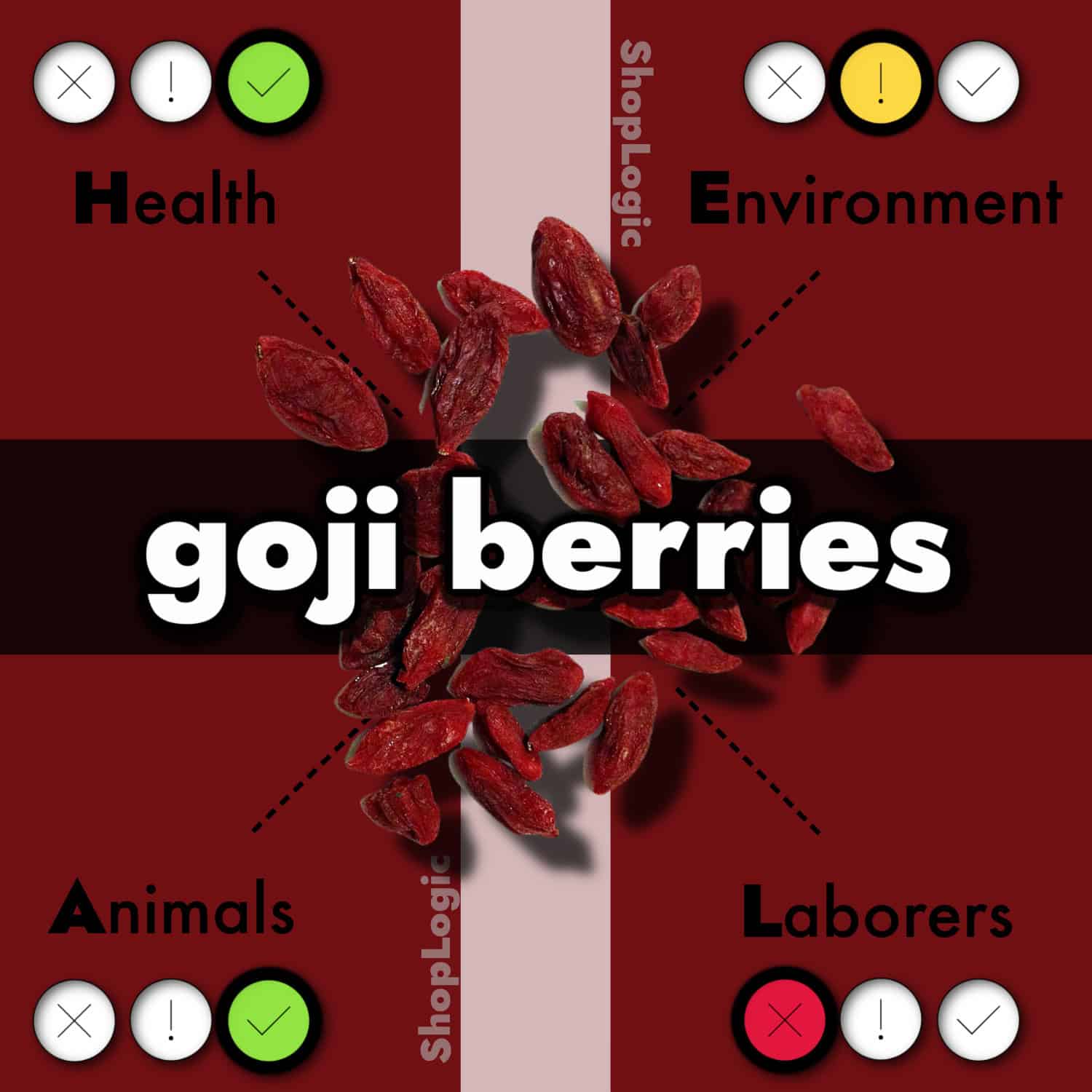
Water footprint: likely low, it takes 967 liters of water to produce 1 kilogram of fruits / 116 gallons of water to produce 1 pound of fruits
Carbon footprint: low, 0.9 kg CO2e to produce 1 kilogram or 2.2 pounds of fruits, a car driving equivalent of 2 miles or 3.25 kilometers
Destruction: moderate, commercial goji berry production occurs in developing countries that may lack environmental protection laws, as an exotic product that requires specific climate conditions, it must be shipped long distances for global consumption
Goji berries are…
- Moderately Sustainable
Animals
Kills: none, goji berry production does not require any animals
Harms: none, goji berry production does not require any animals
Indirectly kills or harms: none, no animals are indirectly killed or harmed from goji berry production as long as toxic chemicals have not been used, be sure to buy Non-GMO/organic, as pesticides harm and kill wildlife and ecosystems by contaminating soil, water, air and plants that animals eat
Goji berries are…
- Vegan
- Harmful to wildlife and ecosystems unless organic
Laborers
Health and safety: likely poor, commercial goji berry production occurs in developing nations where humane working laws and regulations often do not exist, overall, agriculture continues to be one of the most dangerous industries, farmworkers may be subject to dehydration, heat stroke, unprotected exposure to harmful, toxic chemicals and pesticides, unsafe machinery and clean drinking water may not always accessible
Living conditions: varies, laborers often face exploitation and working conditions including long hours in the sun and heat performing physically exhausting tasks, labor laws and rights may or may not be in place
Wages: varies, generally farmworkers earn meager wages, there are many cases of underpaid agricultural workers, wage theft and no overtime payment or benefits
Goji berries…
- Likely has laborer concerns
Where do most goji berries come from? 📍
China is the world’s leading goji berry producer.
The world’s top goji berry exporting country is Canada, followed by USA, Chile, Peru, Mexico, Poland, Costa Rica, Lithuania, Germany and Greece.
Are goji berries nutritious? 🥗
Yes! Goji berries are very nutritious and high in fiber, protein and a range of vitamins and minerals including iron, copper, selenium and vitamins A and C and antioxidants.
Are goji berries gluten free?

Yes, goji berries are gluten free. Goji berries do not contain gluten. Goji berries are a type of fruit berry, therefore making it a naturally gluten free food.
Celiac and gluten sensitivity symptoms are similar and may include:
- recurring abdominal pain
- chronic diarrhea
- constipation
- tingling
- numbness in hands and feet
- chronic fatigue
- joint pain
- unexplained infertility
- low bone density (osteopenia or osteoporosis)
There are hundreds of potential symptoms, many of which are also symptoms of other conditions.
Going gluten-free easier than ever with this: Gluten and Gluten Free Foods List
Are goji berries a common food allergen?

No, goji berries are not a common food allergen. Some people may experience allergic reactions to goji berries but it is relatively rare by comparison.
A group of the eight major allergenic foods, AKA the Big-8, include:
Be aware of common dietary restrictions and food allergens with this: The Big 8 Most Common Food Allergens List
Are goji berries a nightshade food?

Yes, goji berries are a nightshade food.
Common nightshade foods include:
- white potatoes
- tomatoes
- eggplant
- tomatillos
- goji berries
- pimentos
- ground cherries
- ashwagandha
- all peppers (like bell peppers, jalapeños, chili peppers, and hot peppers) and red spices (such as paprika, curry powder, chili powder, cayenne powder, red pepper)
Foods commonly mistaken as nightshades (but are not) include:
- zucchini
- sweet potatoes
- mushrooms
- onions
- black pepper
Nightshade allergy reactions include:
- digestive issues
- dry mouth
- confusion
- vomiting
- visual disturbances.
- hives or skin rash
- shortness of breath
- wheezing
- coughing
- tightness of the throat
- pale skin
Check out this Nightshade Foods List to see them all.
Nightshade vegetables provide excellent nutrition, so there is no need to stop eating them unless you suspect you are sensitive to nightshade foods. If so, eliminate them from your diet to see if symptoms disappear.
Are goji berries low fodmap?

No, goji berries are high fodmap, a food you should eliminate if on a low fodmap diet. This is because all dried fruit is considered high fodmap and most goji berries accessible to consumers is sold in dried form.
A low FODMAP diet may help those with bloating, gas, constipation, diarrhea, stomach pain, and IBS (irritable bowel syndrome).
It’s all about knowing your body. Observe what works and what doesn’t. You body might even react negatively to a low-FODMAP food simply due to intolerance. Everyone is different! Be mindful and patient. Take time to get to know what’s best for your physical health and overall wellbeing.
Are goji berries sustainable?

Goji berry production is relatively sustainable. Be sure to buy non GMO/organic, as toxic, chemical pesticides contaminate air, water, soil, etc. when using regenerative practices.
A 2018 Oxford University study – which is the most comprehensive analysis to date of the damage farming does to the planet – found that ‘avoiding meat and dairy is the single biggest way to reduce your impact on Earth’ as animal farming provides just 18% of calories but takes up 83% of our farmland.
Are goji berries vegan?

Yes, goji berries are vegan. Goji berries are a fruit and not an animal product or byproduct, therefore making it a vegan food.
Animals of factory farming are suffering. They live in horrific conditions that often include confinement, physical abuse and unnatural environments…so much so that they need to receive antibiotics to keep from getting ill or spreading disease. Growth hormones allow all kinds of animals to become fatter faster and live short lives.
Because we cannot see for ourselves how these animals live and what they endure does not mean it isn’t happening. The meat, poultry and dairy industries do everything they can to distance us from knowing how our food comes to be in order to keep us in the dark about what we support each time we buy animal derived products and byproducts.
Going vegan is easier than ever, at a glance with this: Vegan and Non-Vegan Foods List
Do goji berries have human rights issues?

The labor involved behind each and every product cannot go unrecognized.
Some known problems include workplace health and safety, child labor, gender inequality, inadequate pay, wage theft and exploitation. Workers can face harassment, humiliation and violence and unfair employers often fail to provide laborers with access to shade, drinking water, restrooms and breaks. Consequently, laborers can face nausea, dizziness, heat exhaustion, dehydration and heat stroke -the leading cause of farmworker death!
Fair trade organizations fight to ensure better social, environmental and economic standards. So we can improve people’s lives with foods we eat every day simply by buying products that are certified fair trade.
Conclusion
Goji berry pros include:
- numerous health benefits
- sustainable
- vegan
- gluten free
- not a common food allergen
- low carbon footprint
- low water footprint
Goji berry cons include:
- a nightshade food
- possible laborer exploitation (as with most foods)
- pesticide ingestion and contamination if not organic (as with most produce)
This post was all about goji berry benefits and side effects.
Sources:
Goji berries, dried – FoodData Central
Medical News Today: Nightshade vegetables