
What are arugula benefits and side effects? Is arugula vegan? Gluten free? Acidic or alkaline? Low fodmap? Good for you? Healthy? Sustainable? Here are arugula pros and cons: all the info on arugula that every ethical consumer wants to know…
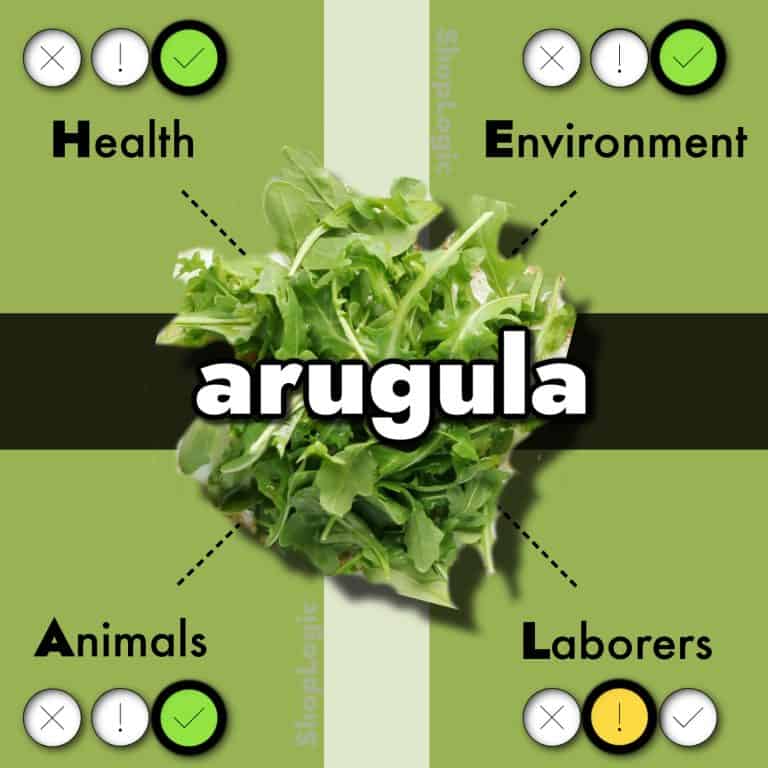
Food is something we consume every day and if you’re like me, you do all the research you can to make sure you don’t hurt yourself, the planet, animals or others when shopping. As an ethical consumer myself, I am giving you all the info I’ve found on arugula benefits and side effects.
You are going to learn all about arugula benefits and side effects. This will include arugula benefits for your health and potential risks, arugula water footprint and arugula carbon footprint, arugula sustainability, if arugula is vegan or impacts animals in other ways, and much more.
After learning if arugula is good or bad for you, the environment, animals and human rights, you will be prepared to make the best choices you can the next time you buy food.
This post is all about arugula benefits and side effects that every ethical consumer should know.
Arugula Benefits And Side Effects
Health
Arugula benefits for health may include:
- brain health
- enhance exercise performance
- eye health
- improved digestion
- increased libido
- reduced inflammation
- vision health
- bone strengthening
- boosted immune system
- diabetes management and prevention
- prevent and fight cancer
- weight loss
Additionally, arugula…
- Alkaline pH level once digested
- Gluten Free
- Not a common Food Allergen
- Low Fodmap
- Other names for arugula are rocket, rucola and roquette
Environment
Water footprint: low, it takes 322 liters of water to produce 1 kilogram of vegetables / 39 gallons of water to produce 1 pound of vegetables
Carbon footprint: low, 1.6 kg CO2e to produce 1 kilogram or 2.2 pounds of vegetables, a car driving equivalent of 3.75 miles or 6 kilometers
Destruction: low, arugula production is relatively sustainable, there is no known significant damage to air, water, land, soil, forests, etc. as long as there are no pesticides, buy Non-GMO/organic, as toxic, chemical pesticides contaminate air, water, soil, etc.
Arugula is…
- Sustainable
Animals
Kills: none, arugula production does not require any animals
Harms: none, arugula production does not require any animals
Indirectly kills or harms: none, be sure to buy Non-GMO/organic, as pesticides harm and kill wildlife and ecosystems by contaminating soil, water, air and plants that animals eat
Arugula is…
Laborers
Health and safety: varies, overall, agriculture continues to be one of the most dangerous industries, farmworkers may be subject to dehydration, heat stroke, unprotected exposure to harmful, toxic chemicals and pesticides, unsafe machinery and clean drinking water may not always accessible
Living conditions: varies, laborer exploitation is common, they may face tough working conditions including long hours in the sun and heat performing physically exhausting tasks, labor laws and rights may or may not be in place, even if worker protection exists, employer violations may go unreported, refugees and migrant workers are especially vulnerable to abuse and mistreatment, fearing consequences of job loss or deportation
Wages: varies, generally farmworkers earn meager wages, there are many cases of underpaid agricultural workers, wage theft and no overtime payment or benefits
Arugula is…
- May have labor issues
Where does most arugula come from? 📍
The world’s top arugula exporting country is Mexico, followed by China, USA, Spain, Italy, Canada, Netherlands, Germany, Portugal and Macedonia.
What are arugula uses? 🍴
You can eat arugula raw or sautéed and even make smoothies, salads, salad dressings, pesto, top it on pizza, and more.
Is arugula nutritious? 🥗
Yes! Arugula is high in calcium, potassium, folate, vitamin C, vitamin A and vitamin K.
Is arugula alkaline or acidic?

Arugula is alkaline.
When you eat food, it breaks down to an ash residue that can be neutral, acidic or alkaline. Minerals such as potassium, calcium, magnesium, sodium, zinc, silver, copper and iron produce an alkaline ash; whereas sulfur, phosphorus, chlorine and iodine, which are in meat, coffee, dairy and alcohol, leave an acid ash.
Going alkaline easier than ever with this: Acidic and Alkaline Foods List
Is arugula gluten free?

Yes, arugula is gluten free. Arugula does not contain gluten. Arugula is a type of vegetable, therefore making it a naturally gluten free food.
While celiac disease may not be as rampant as many marketing trends lead us to believe, you may have a gluten sensitivity…
Celiac and gluten sensitivity symptoms are similar and may include:
- recurring abdominal pain
- chronic diarrhea
- constipation
- tingling
- numbness in hands and feet
- chronic fatigue
- joint pain
- unexplained infertility
- low bone density (osteopenia or osteoporosis)
There are hundreds of potential symptoms, many of which are also symptoms of other conditions.
Going gluten-free easier than ever with this: Gluten and Gluten Free Foods List
Is arugula a common food allergen?

No, arugula is not a common food allergen. Some people may experience allergic reactions to arugula but it is relatively rare by comparison.
A group of the eight major allergenic foods, AKA the Big-8, include:
- milk
- eggs
- fish
- crustacean shellfish
- tree nuts
- peanuts
- wheat
- soybeans
Severe food allergies can be life threatening. Following ingestion of a food allergen, a person with food allergies can experience a severe, life-threatening allergic reaction called anaphylaxis.
Persons may still be allergic to and have serious reactions to foods other than the eight foods identified by the law.
Be aware of common dietary restrictions and food allergens with this: The Big 8 Most Common Food Allergens List
Is arugula low fodmap?

Yes, arugula is low fodmap, a food you can eat if on a low fodmap diet.
A low FODMAP diet may help those with bloating, gas, constipation, diarrhea, stomach pain, and IBS (irritable bowel syndrome).
It’s all about knowing your body. Observe what works and what doesn’t. You body might even react negatively to a low-FODMAP food simply due to intolerance. Everyone is different! Be mindful and patient. Take time to get to know what’s best for your physical health and overall wellbeing.
Water footprint of arugula?

Arugula has a relatively low water footprint compared to other foods.
It takes 322 liters of water to produce 1 kilogram of vegetable / 39 gallons of water to produce 1 pound of vegetable.
Did you know that water is a finite, non-renewable resource?
How much water does it take to produce an apple? A serving of rice? A steak dinner?
Find out how much water your food consumes with this: Water Footprints of Foods and Ingredients List
Carbon footprint of arugula?

Arugula has a relatively low carbon footprint compared to other foods.
It takes around 1.6 kg CO2e to produce 1 kilogram or 2.2 pounds of vegetables, a car driving equivalent of 3.75 miles or 6 kilometers.
Food not only has a water footprint but also a carbon footprint, known as CO2e, which stands for carbon dioxide equivalent. Since carbon measurements are a bit more difficult to comprehend, it is common to equate CO2e to the distance which a car drives in miles or kilometers.
When calculating carbon emissions, some factors may include…
- farm equipment
- animal feed production
- hothouses (greenhouses)
- food processing
- packaging
- transport
- refrigeration
- freezing
- package waste and more
But that’s not all!
It’s best to keep the following in mind when grocery shopping:
- shopping locally reduces transportation emissions
- food without packaging reduces waste as well as the carbon footprint
- refrigerated and frozen foods increase carbon emissions
- seasonal foods reduce carbon emissions from hothouses (greenhouses)
- growing plant-based foods at home is the most environmentally sustainable method with zero carbon footprint
Find out how much carbon your food emits with this: Carbon Footprints of Foods and Ingredients List
Is arugula sustainable?

Yes, arugula production is relatively sustainable since there is no significant damage to air, water, land, soil, forests, etc. Be sure to buy non GMO/organic, as toxic, chemical pesticides contaminate air, water, soil, etc. when using regenerative practices.
A 2018 Oxford University study – which is the most comprehensive analysis to date of the damage farming does to the planet – found that ‘avoiding meat and dairy is the single biggest way to reduce your impact on Earth’ as animal farming provides just 18% of calories but takes up 83% of our farmland.
In fact, consuming animal products and byproducts is not environmentally friendly and is one of the worst things for the Earth. Not only is meat production wasteful, it causes enormous amounts of pollution. The industry is one of the biggest causes of climate change.
Read more about ‘What Makes Food Sustainable Or Unsustainable?’
Is arugula vegan?

Yes, arugula is vegan. Arugula is a leaf vegetable and not an animal product or byproduct, therefore making it a vegan food.
Animals of factory farms and the livestock industry are suffering. They live in horrific conditions that often include confinement, physical abuse and unnatural environments…so much so that they need to receive antibiotics to keep from getting ill or spreading disease.
Go vegan for animals!
It’s the best way to help animals and it’s not as difficult as you may think. Speak for animals with your actions, for they cannot speak at all.
Going vegan is easier than ever, at a glance with this: Vegan and Non-Vegan Foods List
Does arugula have human rights issues?

At this time there are no major concerns with arugula production but that doesn’t mean it isn’t happening! It’s important to stay aware of human rights concerns and worker exploitation that may come with specific brands.
Did you know the single largest employer in the world is agriculture? The labor involved behind each and every product cannot go unrecognized.
Sadly, many labor concerns exist around the world in both developed and developing countries. We must be vigilant to ensure what we buy is not contributing to industries that are unfair to their valuable workers. Additionally, fair trade organizations fight to ensure better social, environmental and economic standards. We can improve people’s lives with foods we eat every day simply by buying products that are certified fair trade.
Be sure to read up on this list of ‘Foods You Should Always Buy Fair Trade‘
This post was all about arugula benefits and side effects.
Sources:


